
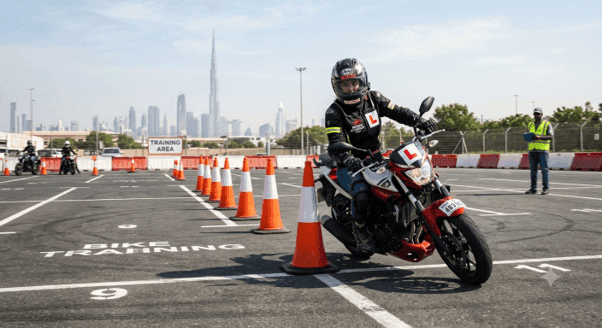
Many riders fail their first attempt for one small reason. They practice for the road and forget the yard. The RTA motorcycle test Dubai has two parts, and each part checks a different skill. This blog explains both in plain steps, so you know what to expect before test day.
Why Dubai Riders Are Choosing Two Wheels
Traffic in Dubai moves fast, and parking is rarely easy. A motorcycle saves time on busy routes and costs less to run. Delivery riders, students and weekend cruisers all share this view.
But a bike asks for more care than a car. Balance, clutch control and road awareness must work together. That is why the license process is strict, and why good preparation matters.
Steps to Get Your UAE Bike License
The path is simple once you see it laid out. Rules can change, so always confirm the latest details with the UAE bike license authority or your driving institute.
Check eligibility: Applicants usually need to be at least 18 years old, with a valid Emirates ID or passport.
Complete an eye test: This is a standard requirement for every license category.
Open a traffic file and enroll: Choose an approved driving institute with motorcycle training.
Attend lessons: Training builds control in the yard first, then on the road.
Pass the theory test: It covers traffic signs, right of way and safe riding rules.
Pass the yard test: This is the controlled skills assessment.
Pass the road test: The final step proves you can ride safely in real traffic.
Each stage must be cleared before the next one begins. Skipping preparation at any point usually leads to a retest.
Understanding the Motorbike License Cost
Most people ask about price first, and that is fair. The motorbike license cost is not a single fee. It is a group of smaller payments added together.
Here is what usually makes up the total:
Traffic file opening and eye test charges
Training lessons at the institute
Theory test fees
Yard and road test fees
Retest charges, if you do not pass the first time
Fees differ between institutes and change from time to time. Ask for a written breakdown before you enroll. It prevents surprises later.
Ways to Keep the Total Lower
Book lessons in a steady pattern. Long gaps make you forget skills and cost extra practice hours.
Study the theory material properly. A failed theory test means paying again.
Ask about installment plans if paying in one go is difficult.
Practice the yard exercises until they feel automatic.
The cheapest route is usually the one where you pass the first time.
Yard Test Exercises Explained
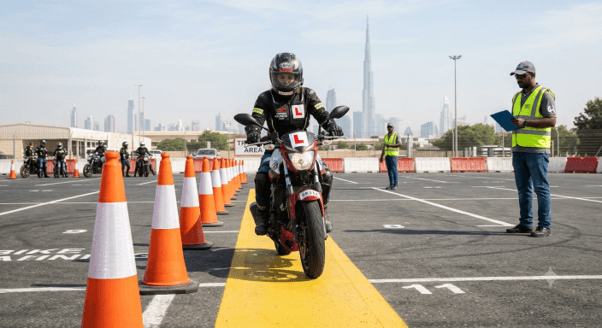
The yard test takes place in a marked area, away from traffic. Here, examiners look at how well you control the machine at low speed. Nerves show up fast in this section, because small mistakes are easy to see.
Exercises may vary by center, so treat this list as a general guide.
Slow Speed Balance
You ride a short, straight path as slowly as possible without putting a foot down. The trick is to use light clutch pressure and a touch of rear brake. Keep your eyes far ahead, not on the front wheel.
Cone Weaving
Cones are placed in a line, and you steer around them in a smooth pattern. Think of it as drawing a gentle snake on the ground. Sharp, jerky turns usually mean you are looking too closely.
Figure Eight and U-Turn
These exercises test steering at right angles. Look through the turn toward your exit point. Your bike tends to follow your eyes, which is a useful habit.
Controlled Braking and Stopping
You may be asked to stop within a marked zone. Use both brakes together and stay upright. Grabbing the front brake alone can unsettle the bike.
Quick Yard Tips
Warm up with a few slow laps before your slot
Keep your knees tight against the tank
Relax your shoulders and grip
Do not stare at cones, since you will ride toward them
Breathe out slowly before each exercise
Short, regular practice beats one long session. Twenty focused minutes can do more than two tired hours.
Road Test Guide
Once the yard is cleared, the road test begins. An examiner follows or observes your ride on public roads. This part checks judgment, not only skill.
What Examiners Observe
Correct lane position and smooth lane changes
Mirror and shoulder checks before every move
Speed control that matches signs and traffic
Safe distance from vehicles ahead
Handling of junctions, roundabouts and traffic lights
Calm reactions to sudden events
Smoothness matters more than speed. A steady ride shows confidence, even if you are a little nervous.
Common Mistakes That Cost Marks
Forgetting a shoulder check before turning
Riding too close to the vehicle in front
Stalling at a signal or junction
Poor indicator use
Wrong lane choice at a roundabout
Most of these come from rushing. Slow down your thinking, not only your speed.
Road Test Tips
Practice the likely test routes with your instructor
Ride at a steady pace and avoid sudden braking
Scan far ahead, then near, then ahead again
Signal early, so others can read your plan
If you make a small error, stay focused and carry on
A minor slip does not always mean failure. Panic after the slip often does more harm.
Gear and Safety Checklist
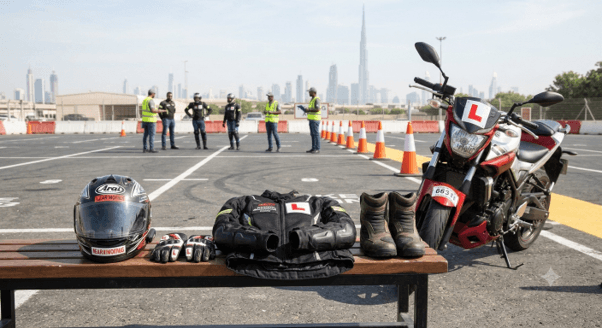
Proper gear protects you and shows the examiner that you take riding seriously. Check these items the night before:
A certified helmet that fits snugly
Gloves with good grip
Sturdy closed shoes or riding boots
A jacket with protective padding
Clear eyewear or a clean visor
Also confirm your documents, appointment time and the condition of the test bike. Arriving early gives you time to settle.
Conclusion
Passing the motorcycle test is about steady habits. Learn the steps, understand the costs, practice the yard exercises and ride calmly on the road. Each part builds on the one before it.
At Eco Drive, we support learners with qualified instructors, flexible schedules and clear guidance from the first lesson. Our team can explain the license process, the available training options and the likely fees. Contact us to plan your next step toward a safe, confident ride.
FAQs
1. How many parts are there in the RTA motorcycle test?
There are usually three assessments: the theory test, the yard test and the road test. Each one must be cleared in order.
2. What is the minimum age for a UAE bike license?
Applicants generally need to be at least 18 years old. Please confirm current rules with the RTA before applying.
3. What affects the motorbike license cost in Dubai?
The final amount depends on lesson hours, test fees, file charges and any retests. Choosing an institute with clear pricing helps you plan better.
4. How can I prepare for the yard test?
Practice slow balance, cone weaving, tight turns and controlled braking. Short, regular sessions with an instructor give the best results.